

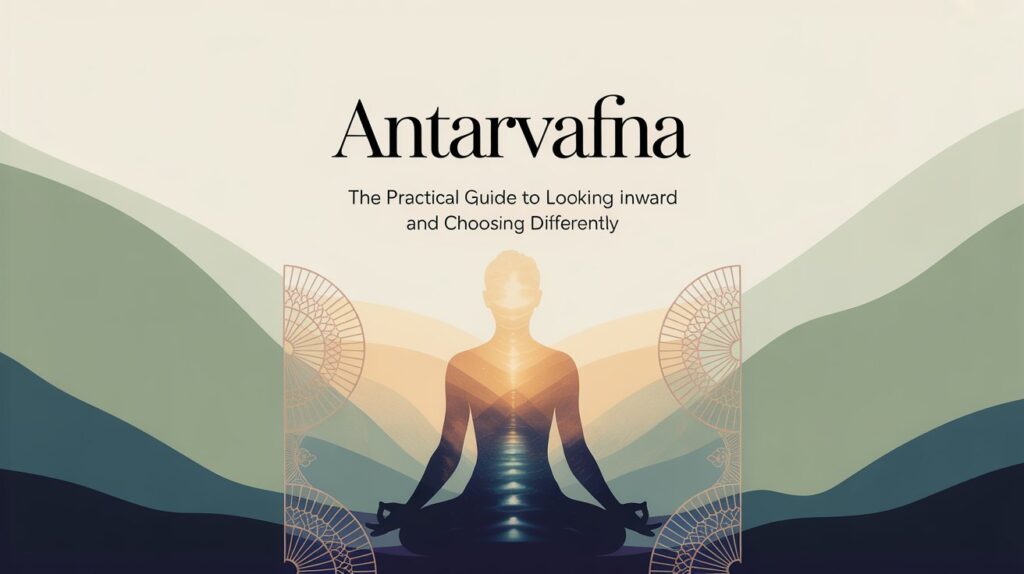
Antarvafna is a modern, loosely used term that points to turning your attention inward — a focused, nonreactive noticing of your thoughts, habits, emotions, and hidden drives so you can see them clearly and choose how to respond.
What Antarvafna means right now
Antarvafna is best thought of as an inner gaze or inward listening — paying attention to what’s happening inside you without automatic reaction.
It’s not just thinking about feelings; it’s watching the patterns that make those feelings repeat.
People use the word for slightly different things: some describe a mindfulness-style observation, others talk about deep self-inquiry or facing stubborn internal drives.
Where the word comes from
The parts of the word trace back to Sanskrit and Hindi roots: “antar” means inner or within and “vasana” refers to latent tendencies, impressions, or desires.
So the basic etymology points to something like inner impressions or inner cravings, depending on context.
Historically the Sanskrit idea of vāsanā is a technical concept about impressions that shape behavior.
That explains why modern uses of Antarvafna often focus on recognizing those habitual pulls inside us.
How people practice Antarvafna today
In practice, Antarvafna looks like short, attentive check-ins: noticing a thought or craving, labeling it silently, and letting it pass without following it.
That single step of noticing changes how often you act on old patterns.
Some guides frame it as deeper than casual mindfulness because the aim is not calmness first but clarity about motivation.
Others mix it with breathwork or journaling so the noticing turns into useful insight and behavior change.
Why this matters
Practicing Antarvafna reduces automatic reactivity; you begin to catch habitual responses before they run you.
That helps with relationships, stress, creative blocks, and decision-making because you’re choosing from awareness instead of reflex.
It also reveals recurring emotional patterns that often hide under everyday busyness, which makes long-term change possible rather than just quick fixes.
Just like people carefully shape their outer appearance, choices around personal style, such as using products like the Zosisfod Eye Brow Pencil, often reflect deeper inner preferences and self-awareness.
Common confusions and cautions
A lot of internet results mix Antarvafna with antarvasna, a word commonly used to mean inner desire or sexual longing in Hindi usage.
So don’t assume every mention online is the same idea; context matters and some references are sexual in tone while others are spiritual or psychological.
Also, since the term is now used in blogs and social posts, you’ll find different takes and occasional hype.
Treat what you read as starting points, not settled doctrine. Practical testing in your own life is the best filter.
Simple Antarvafna exercises you can try
- Sit for two minutes, watch a single thought or impulse, and name it (example: “worry” or “want”). Keep it short and without judgment.
- When a strong emotion appears, mentally step back and ask, “What story is running this?” Write the short answer once and move on.
- At the end of the day list two repeated inner pulls you noticed and one small action you’ll try tomorrow to interrupt them.
Do these consistently and you’ll notice small shifts fast: less automatic blame, clearer choices, fewer impulse regrets.
Where Antarvafna fits in a personal growth map
Think of Antarvafna as a bridge between mindfulness and psychological self-honesty.
It’s the practical habit of telling truth to your inner life so outward choices line up with what you actually want.
Used well it complements therapy, coaching, spiritual practice, and creative work. It is flexible, low-tech, and easy to fold into daily life.
Some people explore self-awareness through reflection and mental habits, while others come across concepts like Suhmoraes706 when researching modern digital identities and emerging inner-expression trends online.
Final takeaway
Antarvafna is a useful, contemporary way to name the skill of watching internal drives without immediately following them.
If you want clearer choices, fewer reactive moments, and a stronger sense of personal agency, building a small Antarvafna practice is a direct, practical step.