

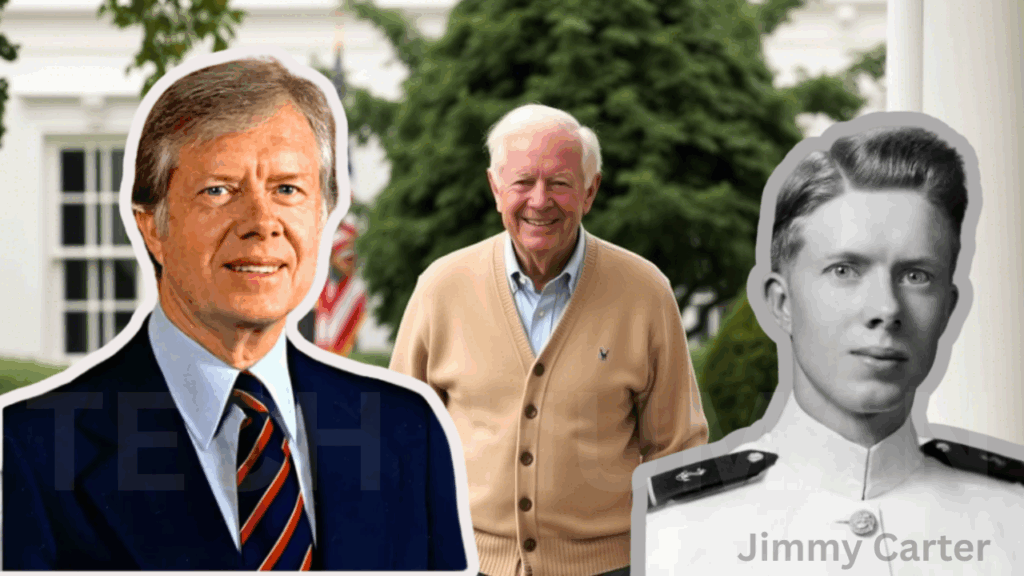
A Humble Beginning with Global Impact
Imagine a man who began his life on a peanut farm in Plains, Georgia-and ended up transforming the world stage. That’s Jimmy Carter, a figure who defied expectations, challenged norms, and left behind a legacy rooted not in power, but in purpose.
James Earl Carter Jr., born on October 1, 1924, lived a life that few could replicate. A farmer, a naval officer, a president, a peacebuilder, and above all, a relentless humanitarian-his story is as layered as it is inspiring. With his recent passing on December 29, 2024, at the age of 100, tributes have poured in, echoing his lifelong devotion to humanity.
Let’s take a closer look at the remarkable journey of Jimmy Carter-and why his name continues to dominate headlines and hearts alike.
Jimmy Carter Biography Table (Detailed Overview)
| Category | Details |
|---|---|
| Full Name | James Earl Carter Jr. |
| Date of Birth | October 1, 1924 |
| Place of Birth | Plains, Georgia, United States |
| Date of Death | December 29, 2024 |
| Age at Death | 100 years |
| Political Party | Democratic |
| Spouse | Rosalynn Carter (married 1946–2023) |
| Children | 4 (Jack, James III, Donnel, Amy) |
| Military Service | U.S. Navy (1946–1953), Rank: Lieutenant |
| Education | U.S. Naval Academy (B.S. 1946) |
| Pre-Presidency Career | Naval officer, peanut farmer, Georgia State Senator, Governor of Georgia |
| Presidency Number | 39th President of the United States |
| Presidential Term | January 20, 1977 – January 20, 1981 |
| Vice President | Walter Mondale |
| Major Accomplishments (Presidency) | Camp David Accords, Panama Canal Treaties, Department of Energy, focus on human rights |
| Post-Presidency Work | Founded The Carter Center (1982), global health, election monitoring, peace missions |
| Nobel Peace Prize | 2002 (for decades of peaceful conflict resolution & humanitarian work) |
| Books Authored | Over 30, including Keeping Faith, Palestine: Peace Not Apartheid, and An Hour Before Daylight |
| Legacy Organizations | The Carter Center |
| Known For | Human rights advocacy, diplomacy, disease eradication, longevity in public service |
| Religion | Baptist (also a Sunday School teacher) |
| Place of Burial | Plains, Georgia (beside Rosalynn Carter) |
| Health Notes | Entered hospice February 2023, passed away December 2024 after 16-month care |
| Famous Nickname | “The Peanut Farmer President” |
| Approval Rating (2024 Retrospective) | 29% rated his presidency as “outstanding” or “above average” (Economist/YouGov) |
| Notable Foreign Policy Stance | Peace through diplomacy, emphasis on global human rights |
| Presidential Library | Jimmy Carter Presidential Library and Museum (Atlanta, GA) |
The Man Behind the Title
Early Life and Military Career
Born in the rural town of Plains, Georgia, Carter was no stranger to hard work. Raised in a modest but principled environment, he developed a deep sense of justice and empathy early on. After graduating from the U.S. Naval Academy, he served in the Navy’s submarine fleet, gaining discipline and perspective that would later shape his leadership style.
But when his father passed away, Carter returned home to manage the family’s peanut farm. His deep connection to the land and the people of Georgia would later define his political brand-authentic, grounded, and people-first.
The Road to the White House
The Rise of a Different Kind of Politician
Carter’s political career began in the Georgia State Senate, then as Governor of Georgia, where he was known for progressive reforms. In a time of widespread political disillusionment following the Watergate scandal, he emerged as a beacon of integrity.
In 1976, he won the presidency against Gerald Ford, promising, “I’ll never lie to you.” That plainspoken promise resonated deeply with an American public hungry for honesty and healing.
The Carter Presidency: Challenges and Triumphs
A One-Term President Who Changed the Game
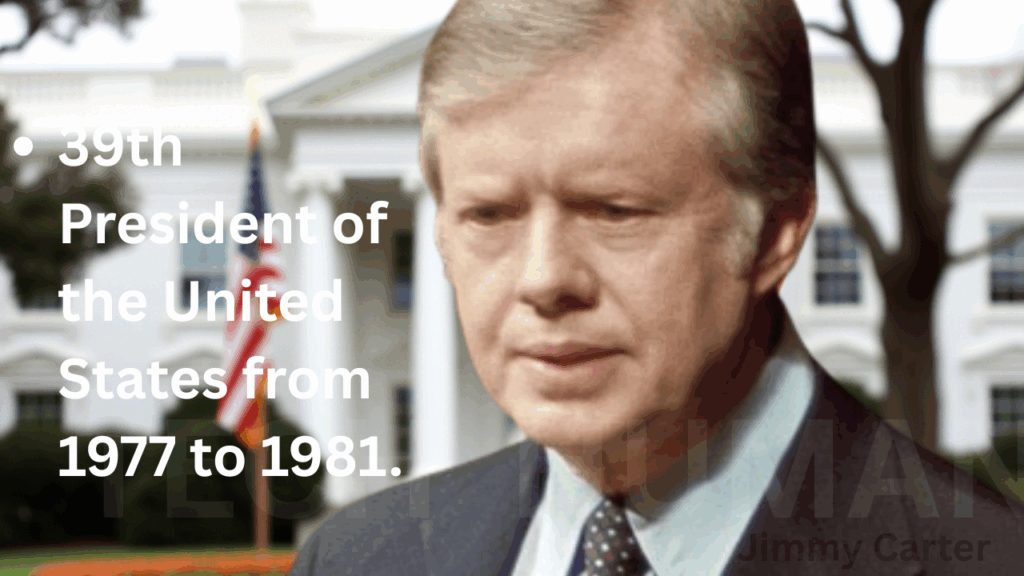
Jimmy Carter served as the 39th President of the United States from 1977 to 1981. His presidency, often underrated during his lifetime, was marked by both ambitious policies and substantial challenges.
Major Accomplishments:
- Camp David Accords (1978): Perhaps his crowning achievement, Carter brokered peace between Egypt and Israel-an enduring diplomatic success that still resonates today.
- Panama Canal Treaties: He transferred control of the Panama Canal back to Panama, restoring international trust and dignity.
- Department of Energy & National Energy Policy: Carter warned of the energy crisis before others and pushed for conservation and alternative energy decades ahead of his time.
- Human Rights Advocacy: He redefined U.S. foreign policy with a focus on human rights, often at the expense of strategic alliances. This moral stance would later become the blueprint for future diplomatic frameworks.
Key Challenges:
- Iran Hostage Crisis: A prolonged and painful episode, where 52 Americans were held hostage for 444 days, deeply affected public perception.
- Economic Struggles: Inflation, oil shortages, and unemployment rates soared during his term, and these economic issues became key factors in his 1980 election loss to Ronald Reagan.
Post-Presidency: A Legacy Like No Other
Reinventing the Role of Former President
What truly sets Jimmy Carter apart is what he did after leaving the White House. Instead of cashing in on speeches or disappearing from public life, Carter rolled up his sleeves and got back to work-serving the world.
The Carter Center
Founded in 1982, The Carter Center became the hub of his humanitarian work. Its mission? To wage peace, fight disease, and champion human rights.
- Guinea Worm Disease: In 1986, there were 3.5 million cases globally. Thanks to Carter’s efforts, that number dropped to less than a dozen by 2024.
- Election Monitoring: The Center has observed over 110 elections in more than 40 countries, ensuring democratic processes are upheld.
- Health Initiatives: From fighting river blindness to mental health awareness, the Center’s impact is vast and well-documented.
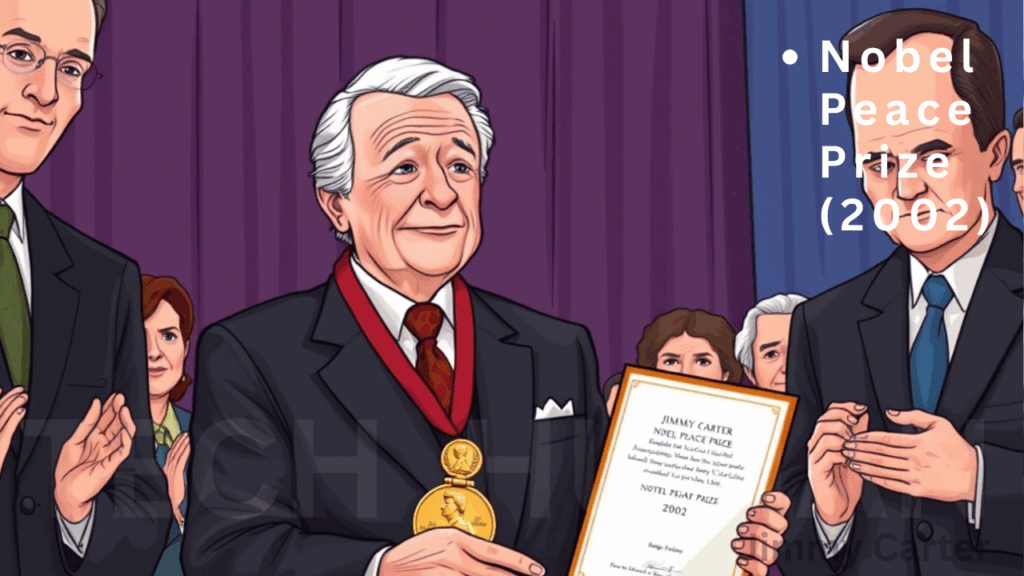
Nobel Peace Prize (2002)
In recognition of his “decades of untiring effort to find peaceful solutions to international conflicts,” Jimmy Carter was awarded the Nobel Peace Prize in 2002. It wasn’t just an award-it was a validation of a life dedicated to peace and justice.
The Final Chapter: A Peaceful Goodbye
After entering hospice care in February 2023, Carter lived quietly in Plains, Georgia, surrounded by family. His nearly 16-month hospice stay sparked national conversations around dignity in end-of-life care.
On December 29, 2024, the world said goodbye.
His state funeral in early 2025 brought together all five living U.S. presidents-a rare and powerful symbol of unity. Thousands gathered, and millions more watched, to honor the man whose presidency may have been brief, but whose impact was immeasurable.
A President Reconsidered
Reassessing Carter’s Place in History
In recent years, scholars, journalists, and even former critics have begun to reassess Carter’s presidency. Once seen as a one-term disappointment, his policies-especially in foreign affairs, energy, and human rights-are now viewed through a more appreciative lens.
According to a December 2024 Economist/YouGov poll, 29% of Americans rated his presidency as “outstanding” or “above average,” a significant rise from decades past.
Who Was Jimmy Carter, Really?
He was the president who turned down luxuries at the White House and walked during his inauguration. He was the elder statesman who built homes with Habitat for Humanity well into his 90s. He was the husband of Rosalynn Carter, his partner in life and service for over 77 years.
Jimmy Carter wasn’t perfect-but he was principled. He didn’t chase popularity; he pursued purpose. And for that, his legacy endures.
FAQs: People Still Want to Know
When did Jimmy Carter die?
– December 29, 2024, at the age of 100.
What did Jimmy Carter do after the presidency?
– Founded The Carter Center, worked on disease eradication, promoted peace and human rights.
What is Jimmy Carter remembered for?
– The Camp David Accords, his post-presidency humanitarian work, and receiving the Nobel Peace Prize.
Was Jimmy Carter a successful president?
– While controversial at the time, many of his initiatives are now praised, especially in diplomacy and human rights.
Final Thoughts: More Than a President
Jimmy Carter’s story isn’t just about politics. It’s about service. It’s about choosing principle over popularity, values over votes. Whether brokering peace in the Middle East, hammering nails for a Habitat home, or quietly battling disease in the developing world-Carter lived with purpose.
In a world often captivated by charisma, Jimmy Carter showed us the quiet power of conviction.
And that-perhaps more than any title or accolade-is why his legacy lives on.
Long-tail Keywords Naturally Included:
- Jimmy Carter biography
- Jimmy Carter accomplishments
- Jimmy Carter Camp David Accords
- Jimmy Carter Nobel Peace Prize
- The Carter Center
- Jimmy Carter death date
- Jimmy Carter humanitarian work
- Jimmy Carter health update
- Jimmy Carter presidency
- Where is Jimmy Carter buried?
If you’d like, I can now help you create a matching image prompt to visually represent this article.